Terrace Gardening in India for Beginners: Complete Setup Guide
A bare terrace can become a productive growing space, but a successful setup starts with the roof itself, not with buying plants. Terrace gardening in India works best when you plan for strong sun, seasonal heat, monsoon rain, drainage, wind and the extra weight of wet containers from the beginning.
This guide is written for first-time home growers who want a practical Indian terrace gardening setup without turning the rooftop into a maintenance-heavy project. It covers how to assess the space, choose containers, prepare a suitable potting mix, select beginner-friendly crops, manage watering through different seasons and estimate the real cost of getting started.
What Is Terrace Gardening?
Terrace gardening means growing vegetables, herbs, flowers or compact fruiting plants on a rooftop, terrace, balcony or open slab using pots, grow bags, planters or raised containers. Instead of depending on open ground, every plant gets its root space, water and nutrients from the growing medium inside its container.
That makes container management important. A tomato plant in a grow bag cannot extend its roots into surrounding soil when it becomes dry or nutrient-deficient. The size of the container, drainage, potting mix and watering routine therefore have a direct effect on plant health.
Rooftop gardening is particularly useful in Indian cities where ground-level garden space is limited. Tamil Nadu Agricultural University also lists rooftops, verandahs and window sills as suitable places for home gardens when adequate sunlight and water are available.
Before You Start: Check These 5 Things
Before ordering grow bags or seeds, spend a day understanding the terrace. A few checks at this stage prevent expensive corrections later.
- Sunlight: Track direct sun in the morning, around noon and again in the afternoon. Most fruiting vegetables perform best with around 5 to 6 or more hours of direct light, while many leafy greens can manage with less.
- Structural load: Wet soil, water-filled trays and large containers are heavy. Do not assume every roof can safely support a dense garden. If you are unsure about the load-bearing capacity, waterproofing or an older slab, get advice from a qualified building or structural professional before installing a large setup.
- Drainage: Water must leave containers freely and then move away from the roof without pooling. Keep drainage outlets clear, especially before the monsoon.
- Water access: A nearby tap makes daily maintenance much easier. For larger setups, a simple drip line can reduce time and uneven watering.
- Wind: Exposed rooftops can be much windier than balconies. Tall tomatoes, brinjal, okra and climbing vegetables may need stakes, trellises or a sheltered position.
How to Start a Terrace Garden at Home in India
If this is your first terrace garden, keep the setup small enough that you can observe every plant. Six to ten containers are usually easier to learn from than filling the entire roof in one weekend.
A simple sequence is:
- Mark the sunny and partly shaded areas.
- Choose 3 to 5 crops that suit the current season.
- Place containers where excess water can drain safely.
- Prepare the potting mix before sowing or transplanting.
- Group plants with similar watering needs together.
- Set up stakes or trellises before climbers and tall plants become difficult to handle.
- Check plants every few days for moisture, new growth and early pest symptoms.
This approach is more useful than trying to create a finished-looking garden immediately. A terrace garden changes with the season, so the layout should be easy to adjust.
Planning and Designing a Small Home Terrace Garden
Good terrace garden design is mainly about access, sunlight and water movement. Keep a clear walking path so you can reach the back of every container. Plants that cannot be reached easily are the ones most likely to be missed during watering, pruning or pest checks.
Place taller crops and trellises where they will not shade shorter vegetables for most of the day. Use walls or railings for climbers where it is safe to do so. On a small terrace, vertical supports can create useful growing space without crowding the floor.
A practical layout can include:
- Sunny zone: tomato, chilli, brinjal, okra and gourds.
- Leafy zone: spinach, amaranth, methi and coriander where they receive gentler light.
- Climbing zone: bitter gourd, bottle gourd, ridge gourd or cucumber with a secure trellis.
- Work corner: potting mix, hand tools, compost and watering equipment kept away from drainage outlets.
Avoid covering the entire roof with a permanent layer of soil unless the structure and waterproofing were specifically designed for it. Containers are easier to inspect, move and repair.
Best Containers for a Terrace Garden
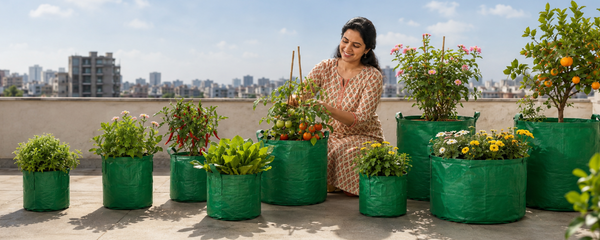
The best container for a terrace garden is one that gives the crop enough root space, drains properly and is practical for the roof. Grow bags are popular because they are relatively lightweight and easy to move, while plastic pots, recycled food-safe containers and other planters can also work when they have adequate drainage holes.
As a starting guide:
| Crop type | Useful starting container size | Examples |
|---|---|---|
| Leafy greens and herbs | Around 12 × 12 inch, or a wide shallow planter | Spinach, amaranth, methi, coriander |
| Compact fruiting vegetables | Around 12 × 12 to 15 × 15 inch | Chilli, compact tomato varieties |
| Larger fruiting vegetables | Around 15 × 15 inch or larger | Brinjal, tomato, okra |
| Climbers and long-duration crops | Larger, deeper containers with a trellis | Gourds, cucumber |
These sizes are starting points, not rigid rules. Variety, climate and how long you intend to keep the plant also matter. Whatever container you use, make sure water can escape freely and do not leave the base sitting continuously in stagnant water.
See our grow bags collection for container options, or read our guide to choosing growing containers for home gardening if you want to compare different formats before buying.
Best Soil Mix for Terrace Gardening in Indian Conditions
Heavy field soil alone is usually a poor choice for rooftop containers. It can compact, drain slowly and add unnecessary weight. A terrace potting mix should hold enough moisture for the roots while still allowing excess water and air to move through it.
A practical starter mix for many vegetables is:
- 40% garden soil or red soil for structure
- 30% cocopeat for moisture retention and reduced weight
- 20% mature compost or vermicompost for organic matter and nutrients
- 10% coarse sand or another suitable drainage component
Treat this as a starting recipe rather than a universal formula. In a humid monsoon climate, you may need a more freely draining mix. On a very hot, dry terrace, a little more moisture-retentive material can be useful. The quality of the local soil also changes the final mix.
Do not keep adding fertiliser simply because a plant looks weak. First check light, root space, moisture and drainage. When feeding is needed, follow the product label and crop stage. You can find compost, cocopeat and other inputs in our organic fertiliser collection.
Best Vegetables and Herbs for an Indian Terrace Garden
Beginners usually get better results by starting with crops that suit containers and the current season instead of choosing only by preference. Good options include:
- Tomato: needs strong light, a sufficiently deep container and support as it grows. Harvest timing varies by variety and season.
- Chilli: compact enough for many terraces and productive over a long period when light and feeding are adequate.
- Brinjal: suitable for containers, but give the roots enough volume and avoid irregular watering.
- Okra (bhindi): well suited to warm, sunny conditions and benefits from a deeper container.
- Amaranth and spinach: useful for beginners because they can be grown in wider containers and harvested as leafy greens.
- Methi and coriander: practical kitchen herbs that do not need the same container depth as large fruiting plants.
- Gourds and cucumber: productive when you have enough sunlight and a strong trellis, but they need more space than leafy greens.
Tamil Nadu Agricultural University also lists tomato, brinjal, chilli, bhendi, amaranthus, gourds, radish, beetroot, coriander and fenugreek among crops suited to roof gardens.
Browse our vegetable seeds collection, and use our guide to easy vegetables to grow at home from seeds for more crop-by-crop starting ideas.
Terrace Gardening by Season in India
There is no single planting calendar that fits the whole country. Delhi, Bengaluru, Chennai, Kochi and hill regions can have very different temperatures and rainfall in the same month. Use local weather and sowing guidance as the final check.
As a broad planning framework:
- Cooler months: leafy greens, coriander, methi, radish and beetroot are often easier to manage. Tomato can also perform well in many regions when temperatures are moderate.
- Warm months: okra, amaranth, chilli, brinjal and several gourds are generally better suited to heat than cool-season greens.
- Monsoon: drainage becomes the priority. Raise containers slightly if needed, keep outlets clear and give plants enough airflow. Heavy rain can leach nutrients and increase fungal problems, so inspect plants rather than following a fixed watering schedule.
- Very hot terraces: protect young seedlings from severe afternoon heat. A shade net can help on exposed roofs during extreme heat, but sun-loving vegetables still need sufficient light.
If you are unsure what to sow, start with two crops suited to the present season and add more after you see how your terrace behaves.
Watering and Drainage: The Part Beginners Most Often Get Wrong
Container plants dry faster than plants in open ground, but that does not mean they need water on a fixed daily timetable. Check the growing mix first. If the upper 2 to 3 cm feels dry and the container is noticeably lighter, it is usually time to water. During cool or rainy weather, the same container may stay moist much longer.
Water thoroughly enough for a little excess water to leave the drainage holes, then let the container drain. Avoid repeatedly giving tiny surface splashes because deeper roots may remain dry. Also avoid leaving trays full of stagnant water under containers.
Early morning is generally the easiest time to water because plants have moisture available before the hottest part of the day. In peak summer, some small containers may need another check later in the day.
How to Maintain a More Natural Terrace Garden
A natural terrace garden does not need routine spraying just because a product is labelled natural or organic. Start with prevention: healthy plants, good airflow, clean containers and regular observation.
- Use mature compost or vermicompost instead of putting raw kitchen scraps directly into crop containers.
- Remove badly damaged or diseased leaves and keep fallen plant material from collecting around pots.
- Check the underside of leaves once or twice a week for aphids, whiteflies, mites, eggs or unusual spotting.
- Use physical controls such as hand removal, pruning or suitable netting when they can solve a small problem.
- If you use neem-based or other plant-protection products, follow the label dilution and application directions. Test on a small area first, avoid spraying in strong midday sun and avoid unnecessary application to open flowers where pollinators are visiting.
For plant-care options, see our organic pest control collection. The product label should always take priority over a generic online mixing ratio.
Apartment and Rooftop Terrace Garden Ideas for Small Homes
An apartment terrace garden does not need dozens of pots. A row of grow bags along a safe parapet, a compact vertical stand for herbs and one trellis for a climber can provide useful variety without blocking the floor.
When rooftop space is limited, think vertically before adding more heavy containers. Use wall-side trellises, tiered stands and railing planters only where they are securely fixed and do not create a falling hazard.
If the terrace is shared, get approval before installing permanent fixtures, irrigation lines, shade structures or heavy planters. Keep common access paths, drainage outlets and service areas clear.
For a smaller decorative setup, our guide to a terrace flower garden using grow bags shows another way to use compact rooftop space.
How Much Does a Terrace Garden Cost in India?
The cost of a terrace garden depends more on the setup than on the number of plants. Reusing suitable containers and existing tools keeps the cost low. Adding stands, drip irrigation, trellises, shade netting or professional waterproofing can increase it quickly.
For a basic 8 to 10 container garden, budget for these groups rather than relying on one fixed figure:
| Essential | What it covers |
|---|---|
| Containers or grow bags | Enough root space for the crops you plan to grow |
| Growing medium | Soil, cocopeat, compost or vermicompost, plus drainage material if required |
| Seeds or seedlings | Start with a few seasonal crops rather than many varieties |
| Basic maintenance | Watering can or hose, simple hand tools, stakes or ties |
| Optional additions | Trellis, drip irrigation, stands, shade net or other site-specific improvements |
For a current benchmark, our Terrace Garden Kit for Beginners is listed at ₹1,799 at the time of this September 2026 review. It includes 10 HDPE grow bags in two sizes, 5 kg cocopeat, 2 kg vermicompost, liquid plant inputs, neem oil plant care and a selection of vegetable seeds. Prices and availability can change, so check the product page before using that figure as your budget.

Common Terrace Gardening Mistakes Beginners Should Avoid
- Buying too much at once. A smaller garden that you can observe daily is more useful than a large setup that becomes difficult to maintain.
- Ignoring roof drainage and waterproofing. Plant health matters, but the building comes first.
- Using undersized containers. Restricted roots dry faster and make feeding and watering less forgiving.
- Choosing crops without checking sunlight. A productive vegetable cannot compensate for a permanently shaded location.
- Watering by the clock. Season, container size, wind and crop stage all change how fast the growing mix dries.
- Using heavy soil without improving drainage. Compacted media can hold too much water and reduce root aeration.
- Spraying before identifying the problem. Yellow leaves can come from watering, root stress, nutrient imbalance, pests or disease. Treat the cause, not just the symptom.
- Ignoring local seasonality. A crop that is easy in Bengaluru in one month may struggle in a hotter or more humid city at the same time.
Terrace Garden Maintenance Checklist
Once the garden is established, a short routine is usually enough:
- Daily or near-daily: glance for wilting, storm damage and obviously dry containers during hot weather.
- Weekly: inspect leaf undersides, remove damaged growth, check stakes and clear drainage outlets.
- Every few weeks: assess plant growth before adding compost or fertiliser. Follow the directions for any packaged input rather than increasing the dose for faster growth.
- Before monsoon: test drainage, secure trellises and make sure no containers block roof outlets.
- Before peak summer: move tender seedlings away from harsh reflected heat and consider temporary shade only where the exposure is severe.
- Between crops: remove old roots, refresh depleted media and clean reusable containers before replanting.
Frequently Asked Questions
How do I start terrace gardening in India?
Begin by checking sunlight, roof drainage, water access and the safe load of the terrace. Start with 6 to 10 containers and a few seasonal crops, then expand after you understand how quickly the pots dry and how much daily maintenance the space needs.
Which plants are best for terrace gardening?
Tomato, chilli, brinjal, okra, amaranth, spinach, methi, coriander and several gourds are common container choices. The best option depends on your city, season, sunlight and available container depth.
What containers are best for a terrace garden?
Grow bags and pots can both work. Prioritise adequate root volume, drainage, durability and manageable weight. Larger fruiting plants need deeper containers than leafy greens and herbs.
What is the best soil mix for terrace gardening?
A useful starting mix is garden soil, cocopeat and mature compost or vermicompost with enough coarse material for drainage. Adjust the proportions for your climate and local soil instead of treating one recipe as compulsory.
Can I make a terrace garden in an apartment?
Yes, if you have a safe terrace, balcony or rooftop area with adequate sunlight and drainage. On shared terraces, get permission before adding heavy containers or permanent fixtures and keep common access and drainage points clear.
How much does a terrace garden cost?
There is no single fixed cost. A small DIY setup can be inexpensive if you reuse suitable containers and tools, while irrigation, stands, trellises, shade structures and waterproofing add to the budget. Plan the essential container, growing-medium and seed costs first.
Does a terrace garden need watering every day?
Not always. Watering depends on the weather, pot size, crop and growing medium. Check moisture first. During hot, windy periods containers may need frequent watering, while monsoon or cool weather can keep them wet for much longer.
Is terrace gardening suitable for beginners?
Yes. Container gardening is easy to scale and individual plants are easier to observe than a large ground plot. The best beginner strategy is to start with a few crops, learn the terrace's light and watering pattern, and expand gradually.
Practical Reference
This guide has been cross-checked against rooftop-gardening guidance from Tamil Nadu Agricultural University, including its recommendations around sunlight, bearing load, waterproofing, drainage, containers and suitable vegetable crops. Local climate and building conditions still take priority when you set up a garden at home.